Tracing the Development of Tiered Reward Structures Within Resort Venues Offering Multiple Gaming Formats
Viktor Washington · Jun 6, 2026
Tracing the Development of Tiered Reward Structures Within Resort Venues Offering Multiple Gaming Formats
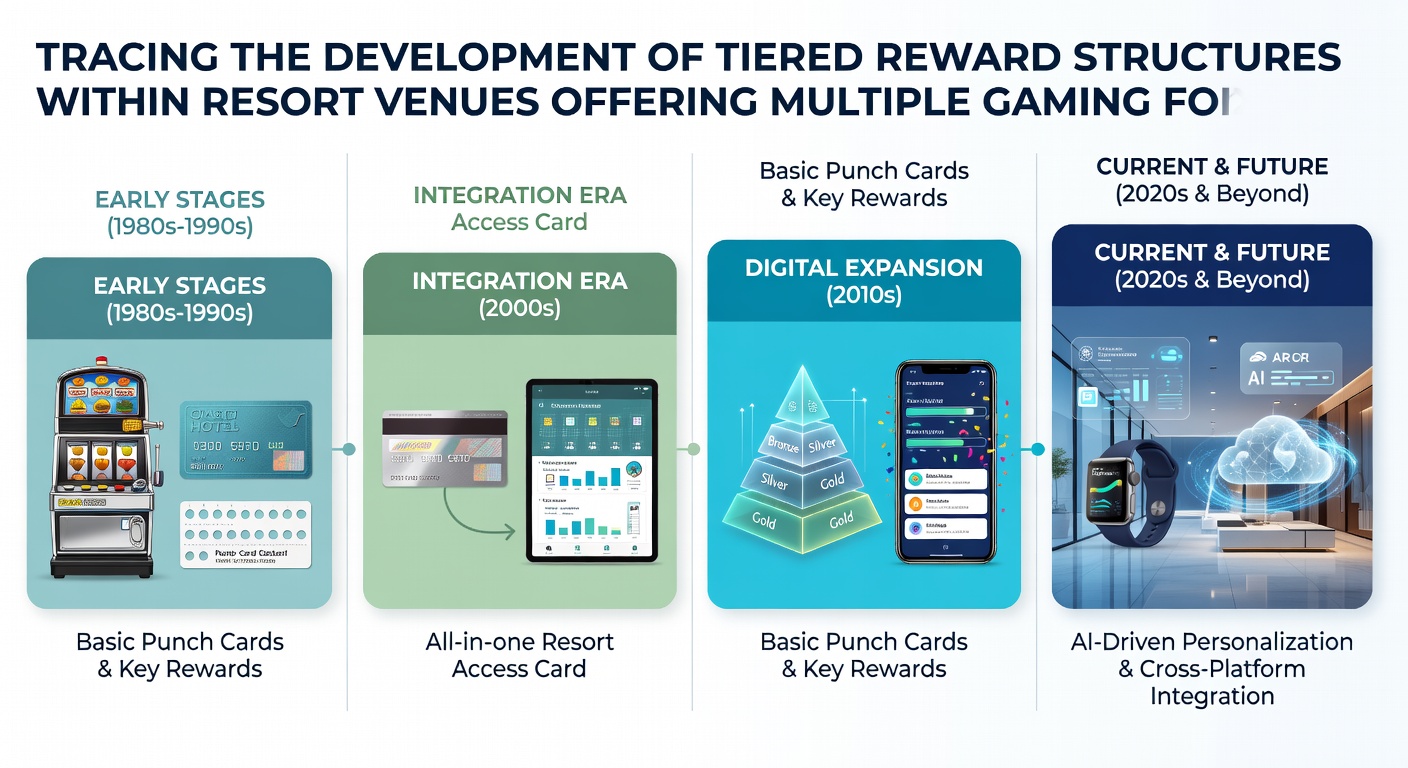
Resort venues that combine slots, table games, sportsbooks, and poker rooms began experimenting with reward programs in the late twentieth century, and those early systems relied on manual tracking of player activity across different formats before shifting to computerized point accumulation. Observers note that properties in Las Vegas and Atlantic City introduced basic comps such as free meals and rooms for high-volume slot players during the 1980s, while table-game participants received separate recognition through pit bosses who recorded buy-ins and average bets by hand.
Early Tracking Methods and Initial Tier Concepts
By the early 1990s several large operators consolidated their separate tracking systems into unified loyalty cards that awarded points based on coin-in from machines and theoretical win from tables, creating the foundation for later tiered structures. Data from the Nevada Gaming Control Board shows that slot handle grew steadily through that decade, prompting resorts to differentiate rewards so that frequent visitors could access better room rates, show tickets, and limousine service as their accumulated points crossed preset thresholds. Resorts offering multiple gaming formats faced the additional challenge of weighting points differently because slot play generated higher volumes yet lower margins compared with table games, and operators adjusted formulas accordingly so that a player moving between blackjack and video poker received balanced recognition.
Expansion Through the 2000s and Integration of New Formats
The 2000s brought widespread adoption of tiered programs modeled after airline mileage clubs, with entry-level, mid-tier, and elite levels that unlocked progressive benefits such as dedicated hosts, spa credits, and priority event access. Properties that added sportsbooks and poker rooms in subsequent years extended the same point-earning logic to those formats, although sports betting often carried lower point multipliers because of its narrower house edge and different risk profile. Researchers at the University of Nevada, Las Vegas documented how integrated resorts in Macao and Singapore refined these models further by linking tier status to total theoretical loss across all gaming verticals, which encouraged cross-format play and increased overall visitation.
Digital Platforms and Real-Time Adjustments
Digital platforms introduced after 2010 allowed real-time point posting and dynamic tier qualification windows that reset annually or quarterly, replacing the static yearly reviews common in earlier decades. Venues with multiple formats began offering bonus multipliers during promotional periods on specific games, such as double points on certain table games during slow mid-week shifts or accelerated earning on sports wagers tied to major events. Figures from the Australian Gambling Research Centre indicate that loyalty program participation rates rose sharply once mobile apps permitted players to monitor progress and redeem rewards without visiting a physical desk, and similar patterns appeared in Canadian provincial gaming facilities that adopted comparable technology.
Regulatory Influences and Cross-Border Variations
Regulatory changes also shaped tier structures, because jurisdictions required clear disclosure of how points convert to monetary value and restricted certain promotions that could be viewed as inducements. In 2026 several North American and European operators are scheduled to update their systems ahead of new responsible-gambling reporting rules that take effect in June, requiring venues to display tier-progress metrics alongside session time and net loss data. Those updates build on earlier compliance work already completed in markets such as New Jersey and Ontario, where regulators mandated transparent point valuations that operators now apply uniformly across slots, tables, and sports products.
One notable development involved the weighting of non-gaming spend, because many resorts discovered that tier status tied solely to gaming activity missed opportunities to recognize diners, shoppers, and hotel guests who contributed to overall revenue. Several chains therefore introduced hybrid earning schedules that grant a percentage of points for non-gaming purchases, allowing a guest who stays multiple nights and dines in resort restaurants to advance tiers even during lower gaming volume periods. Industry reports compiled by the Canadian Gaming Association highlight that such adjustments helped stabilize tier populations during economic downturns when discretionary gaming spend fluctuated.
Current Practices Across Multiple Gaming Formats
Today tiered programs typically feature four or five levels, with each successive tier granting incremental access to private gaming salons, higher cash-back percentages, and personalized offers calibrated to a player's historical mix of game types. Venues that operate both land-based and online platforms often permit point pooling across channels, although regulatory firewalls in certain jurisdictions prevent direct transfer and instead require separate qualification for digital tiers. Observers note that poker rooms frequently receive distinct earning rates because tournament buy-ins and cash-game rake produce different theoretical values than slot coin-in, yet elite-tier players still receive consistent benefits such as tournament entry credits or dedicated tableside service regardless of primary format preference.
Looking Ahead to Mid-2026 Updates
Looking ahead to mid-2026, several major operators plan to introduce tier-status extensions that carry over for an additional quarter if a player maintains a minimum activity threshold, a feature already tested in select Asian markets. These refinements coincide with broader industry efforts to integrate player data from sportsbooks more seamlessly, since live betting and in-play wagers now represent a growing share of total handle at resorts that added those offerings in recent years. Academic analyses published through the Gambling Research Exchange Ontario continue to examine whether tier benefits influence game selection or session length, providing operators with empirical guidance on future point-multiplier adjustments.
Conclusion
The progression from handwritten comp ledgers to algorithm-driven, multi-format loyalty platforms reflects broader technological and regulatory shifts that have standardized tiered reward structures across resort venues. Properties continue to refine earning rates and benefit packages in response to new gaming formats, cross-channel play patterns, and jurisdiction-specific reporting requirements, ensuring that point systems remain both competitive and compliant as operator portfolios expand.