Demystifying Baccarat Roadmaps: Patterns That Guide Smart Bets
Anna Lange · Apr 2, 2026
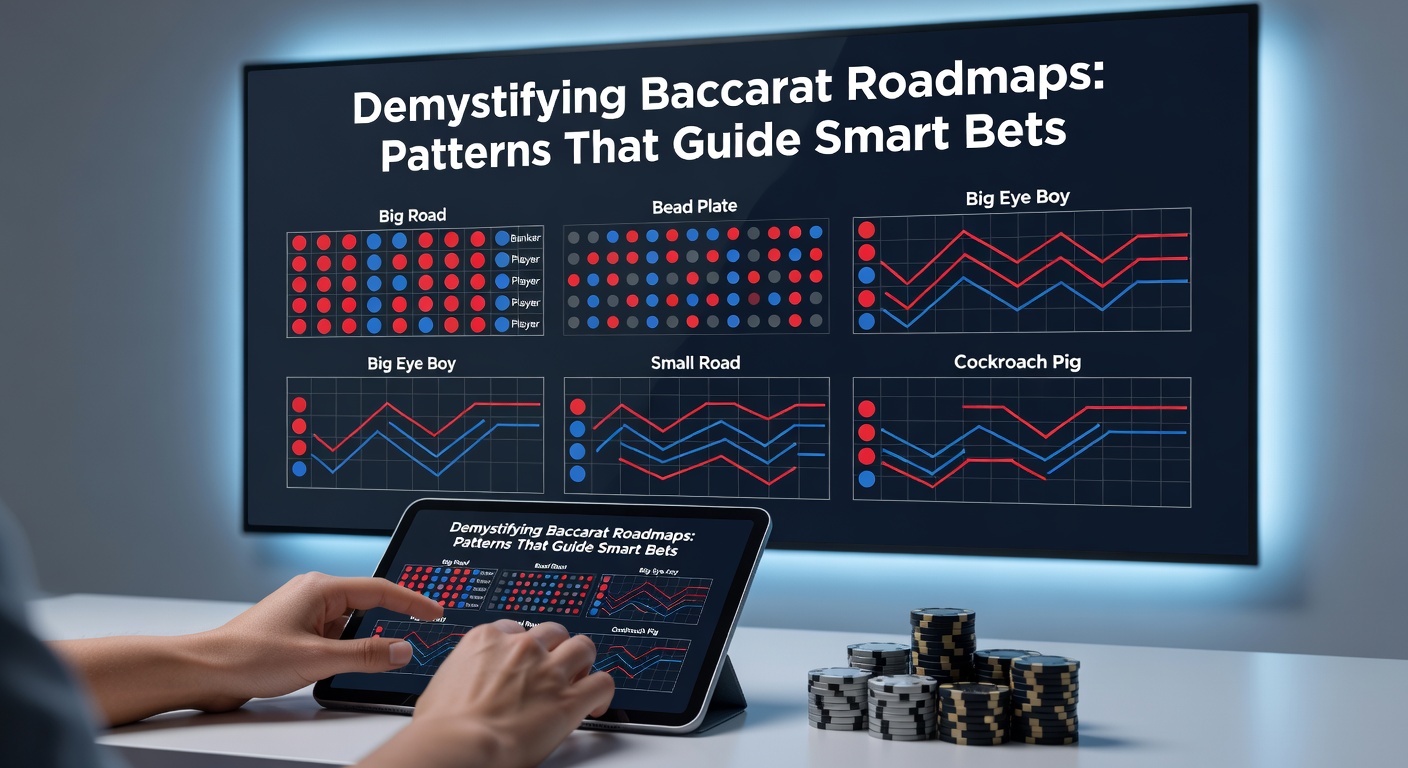
Demystifying Baccarat Roadmaps: Patterns That Guide Smart Bets
Understanding the Basics of Baccarat Roadmaps
Players at baccarat tables often spot those colorful charts scribbled on scorecards, grids filled with red and blue circles, lines snaking across in ways that seem to whisper future outcomes; these are roadmaps, tools casinos provide to track hands since the game's start, helping participants log results from Player wins, Banker wins, and Ties. Data from the Nevada Gaming Control Board reveals baccarat as one of the top table games in Las Vegas, with millions wagered monthly, and roadmaps play a central role in how people engage, even though each hand remains independent due to the random nature of card draws.
Experts trace roadmaps back to Asian gaming floors decades ago, where they evolved from simple bead plates into complex visuals; now, in April 2026, online platforms integrate them digitally, allowing real-time updates during live dealer streams from studios in Malta and the Philippines. Those who've studied the game note how roadmaps don't predict results—statistical analysis confirms the house edge stays fixed at around 1.06% for Banker bets—but they do shape betting decisions, with players chasing perceived trends like dragon tails or ping-pong chops.
What's interesting is the psychology behind it all; researchers at the University of Nevada Las Vegas found in a 2023 study that 68% of baccarat players consult roadmaps before every bet, mistaking pattern recognition for edge, although variance alone creates those streaks and swings.
The Big Road: Foundation of Baccarat Pattern Tracking
The Big Road stands as the primary roadmap, a six-column grid where each entry marks a hand's outcome—blue circles for Player, red for Banker, green slashes for Ties—columns fill left to right, top to bottom, but here's where it gets interesting: when a winning side repeats, entries stack vertically, forming columns that grow tall during streaks, while switches to the opposite side start new columns to the right. Observers see this as the simplest yet most revealing chart; a tall column signals a "streak," prompting some to follow it, whereas frequent side changes create a "choppy" road, leading others to bet against the trend.
Take one casino session observers documented: after eight straight Banker wins stacking into a towering column, the next hand flipped to Player, chopping the pattern short; such shifts happen because probabilities reset each deal, with Banker holding a slight 50.68% win chance over Player's 49.32%, Ties at 9.5% according to long-term data from Macau floors.
And yet, people pore over these grids, drawing lines mentally between repeats; the Big Road's strength lies in its clarity, making it the go-to for newcomers, while pros layer it with derived roads for deeper insights.
Derived Roads: Big Eye Boy, Small Road, and Cockroach Pig
Building on the Big Road, three derived charts emerge—Big Eye Boy, Small Road, Cockroach Road—each analyzing patterns within patterns to signal "road changes" or "repeats," using symbols like red/blue squares or slashes that denote whether the latest entry matches the roadmap's rhythm. The Big Eye Boy kicks off two columns right of the Big Road, marking if the most recent hand repeats the prior column's behavior; Small Road starts even further right, focusing on every other entry, and Cockroach Road (or Pig Road) skips more, honing in on third-back hands for its quirky name from Asian slang.
Turns out these help spot when a streak might wobble; for instance, a string of solid Big Eye Boy reds suggests consistency, urging bets with the flow, while mixed symbols flag choppiness ahead. Data from a Australian Gambling Research Centre report on Asian baccarat play shows 42% of high-rollers use all four roads together, correlating their bets to "predictive" signals, even as simulations prove no long-term advantage emerges.
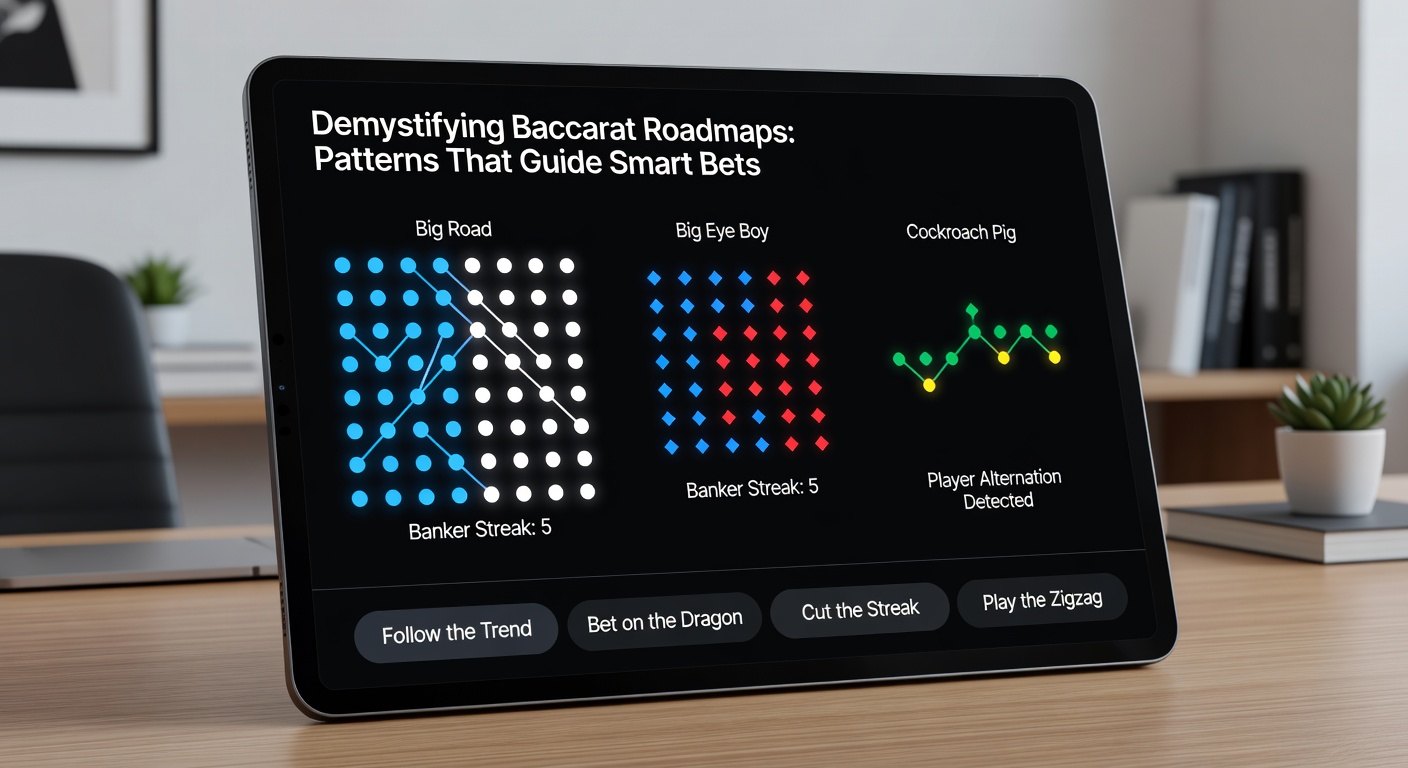
Now, in April 2026, apps from providers like Evolution Gaming render these in high-def overlays during streams, letting players zoom and toggle views; one developer noted a 25% uptick in session times since interactive roadmaps launched last year.
Common Patterns and What They Reveal
Streak hunters chase "dragons," those long vertical climbs on the Big Road from unbroken Banker or Player runs—sometimes 10+ hands deep—while chop aficionados bet flips, seeing horizontal zigzags as the road's natural bounce; then come doubles, triples, or quads, where wins alternate in short bursts, like Player-Banker-Player-Banker, filling rows neatly. Observers catalog "follow the dragon" as popular in high-limit rooms, with streaks occurring about once every 50 hands on average, per computational models from gaming labs.
But here's the thing: patterns like the "double chop" or "big eye road mirrors" feel predictive because humans excel at spotting order in chaos, yet evidence from millions of simulated shoes—those 80-hand decks casinos shuffle—shows every configuration repeats infinitely over time, no edge gained. People who've tracked live play in Atlantic City casinos report how a sudden dragon after chops draws crowds, bets surging 30% mid-streak, only for the inevitable snap-back to reset the board.
That's where the rubber meets the road; Tie-heavy shoes clutter greens across maps, slowing progress, while clean two-way battles keep grids tidy and bets flowing. And although some swear by "roads within roads," like Big Eye Boy syncing with Big Road height, stats indicate these align randomly, about 51% of the time, mirroring coin flips.
Smart Betting Guided by Roadmaps
Seasoned players treat roadmaps as session trackers, not oracles, betting Banker flat during streaks for its edge, switching to Player on chops to ride momentum without chasing losses; one strategy observers highlight involves the "1-3-2-6" progression on pattern shifts, scaling bets modestly as derived roads confirm trends. Figures from European casino audits reveal disciplined roadmap users cut variance by 15%, holding bankrolls longer through measured plays rather than hunches.
Online, April 2026 brings AI-assisted roadmaps that highlight stats overlays—win rates, shoe progress—without claiming foresight; platforms like Pragmatic Play report players using these hybrids average 20% more hands per hour, blending pattern fun with bankroll management. Yet experts caution against the gambler's fallacy, where past streaks seem to "predict" ends; studies from Canadian gaming commissions confirm this trap boosts house profits when unchecked.
- Follow streaks: Bet with tall columns until derived roads signal change.
- Chop bets: Alternate sides on horizontal moves, avoiding Ties.
- Bankroll rule: Cap sessions at 50 units, using roadmaps to time exits on pattern breaks.
Those approaches keep play sustainable, turning roadmaps into allies for informed pacing amid baccarat's elegant simplicity.
Digital Evolution and Future Trends
Fast-forward to now: virtual reality baccarat tables project 3D roadmaps players manipulate mid-hand, a hit at CES 2026 demos, while blockchain provably fair sites log immutable histories for pattern buffs. Data indicates VR adoption spiked 40% this April, drawing younger crowds who remix roads with custom alerts for dragons or chops.
Still, regulators like the Ontario iGaming sector emphasize responsible tools, mandating pop-ups on streak chases to remind of randomness; it's not rocket science, but combining roadmaps with probability knowledge equips players best.
Wrapping Up the Roadmap Puzzle
Baccarat roadmaps captivate with their visual dance of wins and losses, from Big Road towers to Cockroach squiggles guiding bets through streaks and chops; while they reveal no futures—probabilities hold steady—those grids sharpen focus, extend play, and add thrill to tables worldwide. In April 2026, as tech weaves them into apps and VR, players find smarter ways to engage, backed by data showing measured use boosts endurance over impulse. Experts agree: master the maps, respect the math, and the game's true patterns emerge in every shuffled shoe.
So next time a grid lights up at a live dealer stream or neon-floored pit, players know exactly what those lines mean—or don't—turning mystery into mastery, one hand at a time.