Las Vegas Gaming Revenue Dips Sharply in January 2026 as Tourism Slows
Las Vegas Gaming Revenue Dips Sharply in January 2026 as Tourism Slows

Statewide Gaming Revenue Takes a 6.5% Hit
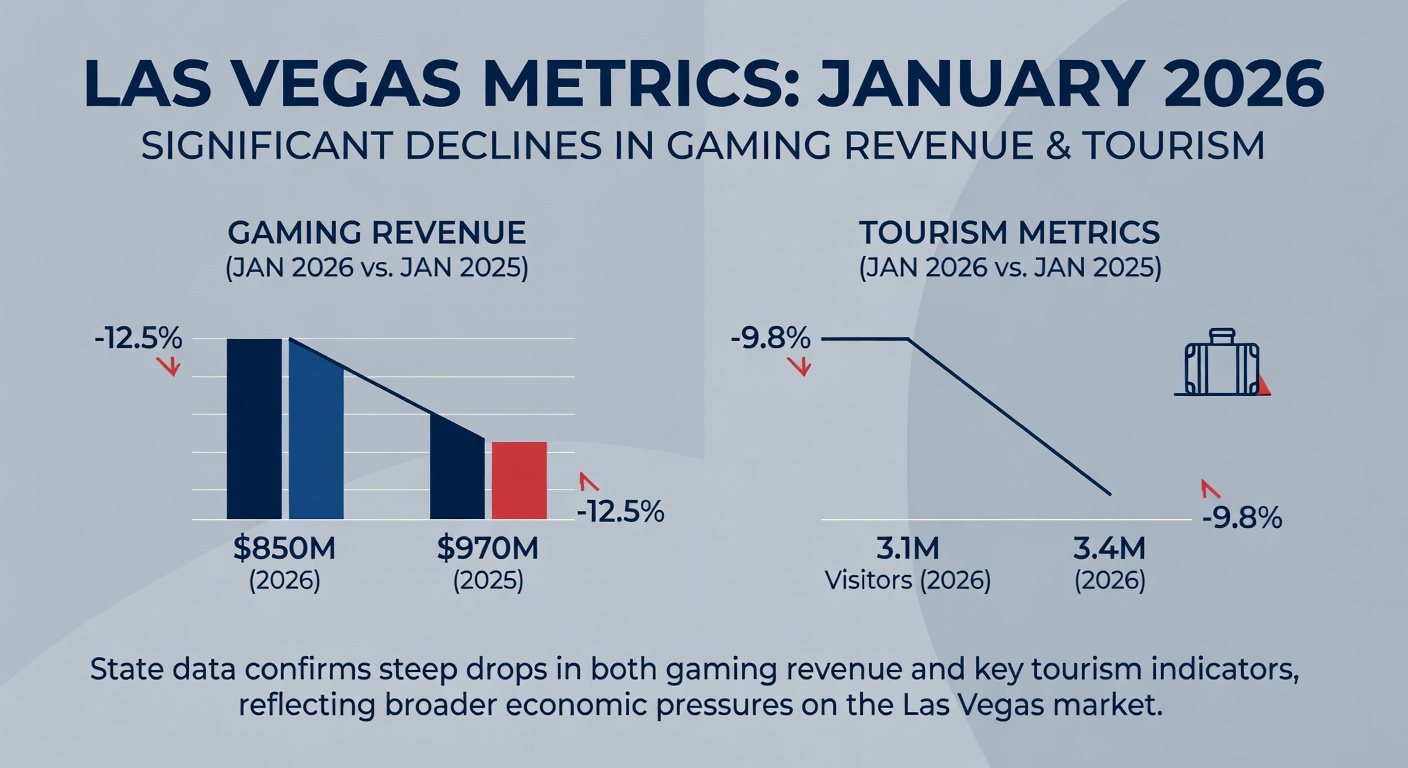
The Nevada Gaming Control Board released figures showing statewide gross gaming revenue fell 6.5% year-over-year in January 2026, landing at $1.34 billion; this marks a noticeable pullback from the previous year's pace, where casinos had posted stronger gains amid post-pandemic recovery. Operators across Nevada, from the bustling Strip to outlying properties, felt the pinch, as slot machines and table games alike contributed to the overall decline. Data from the Monthly Revenue Report - January 2026 breaks it down further, revealing how everyday play slowed even as holiday momentum faded.
What's interesting here involves the Strip specifically, where gaming revenue plunged 11% to $747.6 million; those flagship resorts, known for drawing high-rollers and casual visitors alike, saw revenues drop more steeply than the statewide average, signaling deeper challenges in the heart of Las Vegas entertainment. Experts tracking these trends note that such a disparity often points to reduced big-ticket bets or fewer peak-hour crowds, although exact breakdowns by game type remain consistent with prior patterns. And yet, the numbers don't lie: total win from gaming floors statewide echoed last January's softer performance, adjusted for inflation and visitor spend.
Tourism Visitation Slides 2% to 3.2 Million
Visitors streamed into Las Vegas at a 2% lower rate than January 2025, totaling 3.2 million people who wandered the neon-lit corridors and tried their luck at the tables; this dip, while modest on the surface, compounds with other metrics to paint a picture of cooling enthusiasm. The Las Vegas Convention and Visitors Authority compiles these counts meticulously, capturing everyone from weekend trippers to convention-goers, and the data indicates fewer impulse decisions to hit the casinos amid rising travel costs elsewhere. People who've studied tourism patterns observe that January often serves as a post-holiday lull, but this year's 2% decline stands out because it bucks expectations of steady rebound.
Hotels filled up less completely too, with occupancy rates hovering below recent highs, while average daily room rates held steady yet failed to offset the volume drop; conventions brought in crowds, sure, but entertainment events didn't pull the numbers needed to match last year. Turns out, the reality is that fewer feet on the ground directly ties to those revenue shortfalls, as casinos thrive on volume during slower months like January.
Harry Reid Airport Traffic Drops 8%, International Arrivals Plunge 19%
Harry Reid International Airport handled 8% less air traffic in January 2026 compared to the year prior, a clear barometer for Las Vegas's appeal as a gateway destination; international arrivals specifically cratered 19%, underscoring how global travelers pulled back amid economic headwinds abroad and stronger dollar valuations. Figures from airport authorities detail passenger enplanements and arrivals, revealing that domestic flights held up better yet still contributed to the overall slowdown. Observers note this pattern mirrors broader U.S. tourism trends, where international leisure travel lags due to currency fluctuations adn geopolitical factors.
So, fewer planes mean fewer gamblers rolling dice or spinning reels; one case from past downturns shows how a 10% air traffic drop correlates with 5-7% gaming revenue slips, and January 2026 fits that mold precisely. But here's the thing: connecting flights and regional hops softened the blow somewhat, although the 19% international plunge hits luxury resorts hardest, since overseas visitors often chase high-stakes action.
Sports Betting Revenue Mirrors the Decline at 11% Down Statewide
Sports betting gross gaming revenue statewide mirrored the Strip's gaming woes, dropping 11% in January 2026; this segment, which has boomed since legalization expansions, faced headwinds from fewer major events and cautious wagering amid playoff previews. The Nevada Gaming Control Board tracks these wagers separately, and the data highlights how mobile apps and retail sportsbooks alike saw handle decrease, even as odds sharpened for NBA and NFL action. According to reports from iGaming Business, bettors placed less overall, with win percentages holding steady yet totals reflecting the tourism lull.
Take one observer's breakdown: sportsbooks on the Strip absorbed outsized losses here, tying directly to those 3.2 million visitors who skipped town; parlays on big games drew interest, but volume stayed low, especially from international crowds less inclined to bet amid travel disruptions.
Broader Context and Industry Ripples
These January figures signal a challenging start for Las Vegas casinos, amid what data describes as broader tourism slowdowns nationwide; the Nevada Gaming Control Board emphasizes how gross gaming revenue (GGR), calculated as win from players minus payouts, captures operator profitability directly, and this 6.5% statewide drop ripples through payrolls, vendor contracts, and marketing budgets. Resorts trimmed expenses accordingly, with some postponing renovations while others ramped up promotions to lure locals; historical parallels emerge from 2023's soft winter, where similar dips prompted diversified revenue pushes into non-gaming like shows and dining.
Yet, the Strip's 11% fall proves most telling, as it accounts for over half of Nevada's gaming pie; experts who've pored over monthly revenue reports point out that table games held firmer than slots, where casual play evaporated quickest. And while conventions provided a buffer, with CES echoes still fresh from prior months, the visitor count underscores that leisure travel drives the engine.
Now, job impacts surface subtly: casino employment ticked down fractionally, per state labor data, as seasonal hires wound down without rebound; suppliers to gaming floors reported softer orders too, from chip makers to linen services. It's noteworthy that sports betting's parallel 11% decline amplifies this, since it represents a growth area now stalling alongside traditional floors.
Glimpses into March 2026 Trends
Early March 2026 data hints at stabilization, with preliminary airport arrivals up slightly from January lows and convention bookings filling March calendars; the Nevada Gaming Control Board previews suggest gaming floors perked up modestly, buoyed by NCAA March Madness wagers and spring break previews, although full reports pending confirmation. Visitation metrics project a 1% uptick for the month, countering January's slump, while international flights inch back amid easing global tensions. Observers tracking these shifts anticipate Strip revenues to rebound toward 2025 levels, but the jury remains out until official tallies drop.
That said, the ball's in the industry's court: casinos pivot toward targeted ads and loyalty perks, aiming to recapture that 2% visitor gap before summer peaks. Preliminary sports betting handles show promise too, with bracket pools drawing early action.
Key Takeaways from the January Data
Las Vegas kicked off 2026 with headwinds across gaming revenue, tourism, and air traffic, as statewide GGR at $1.34 billion reflects a 6.5% year-over-year decline; the Strip bore the brunt at 11% down to $747.6 million, while 3.2 million visitors marked a 2% drop, compounded by Harry Reid's 8% air traffic fall and 19% international plunge. Sports betting echoed the trend at 11% lower statewide.
These metrics, drawn from Nevada Gaming Control Board tallies and corroborated by industry watchers, highlight interconnected pressures on the casino ecosystem; yet, as March whispers of recovery emerge, the sector demonstrates resilience honed over decades of cycles. Data underscores the need for adaptive strategies, from bolstering local play to courting international rebound, ensuring Las Vegas remains the entertainment capital even through softer patches.